
Services
Work we do alongside your team
Our chemists, biologists and computational scientists apply the same platforms behind our knowledgebases and models to your targets and your compounds. Every capability below is one we run in production, on a page you can go and read.
Capabilities
Each of these is an engagement, not a license. Scope it to a target, a series, or a collection.
Potency and selectivity ranking
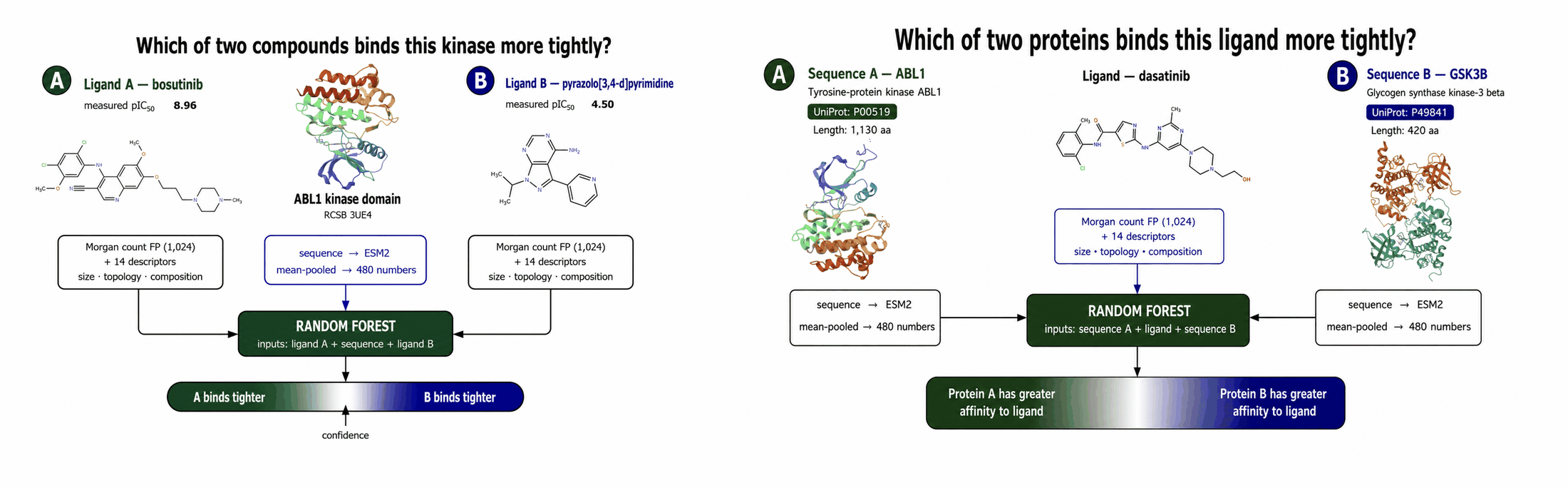
Most models score one compound against one target and leave you to compare the numbers. We build the comparison in: which of two ligands binds this kinase more tightly, and which of two kinases this ligand prefers. Asking it that way turns a scoring problem into a ranking one, multiplies the usable training data, and answers selectivity directly rather than by subtracting two uncalibrated predictions. The same two comparisons run across 34 protein families in the Family Foundation Model, and in depth for G protein-coupled receptors and for kinases.
The Family Foundation Model → The GPCR Foundation Model → The Kinase Foundation Model →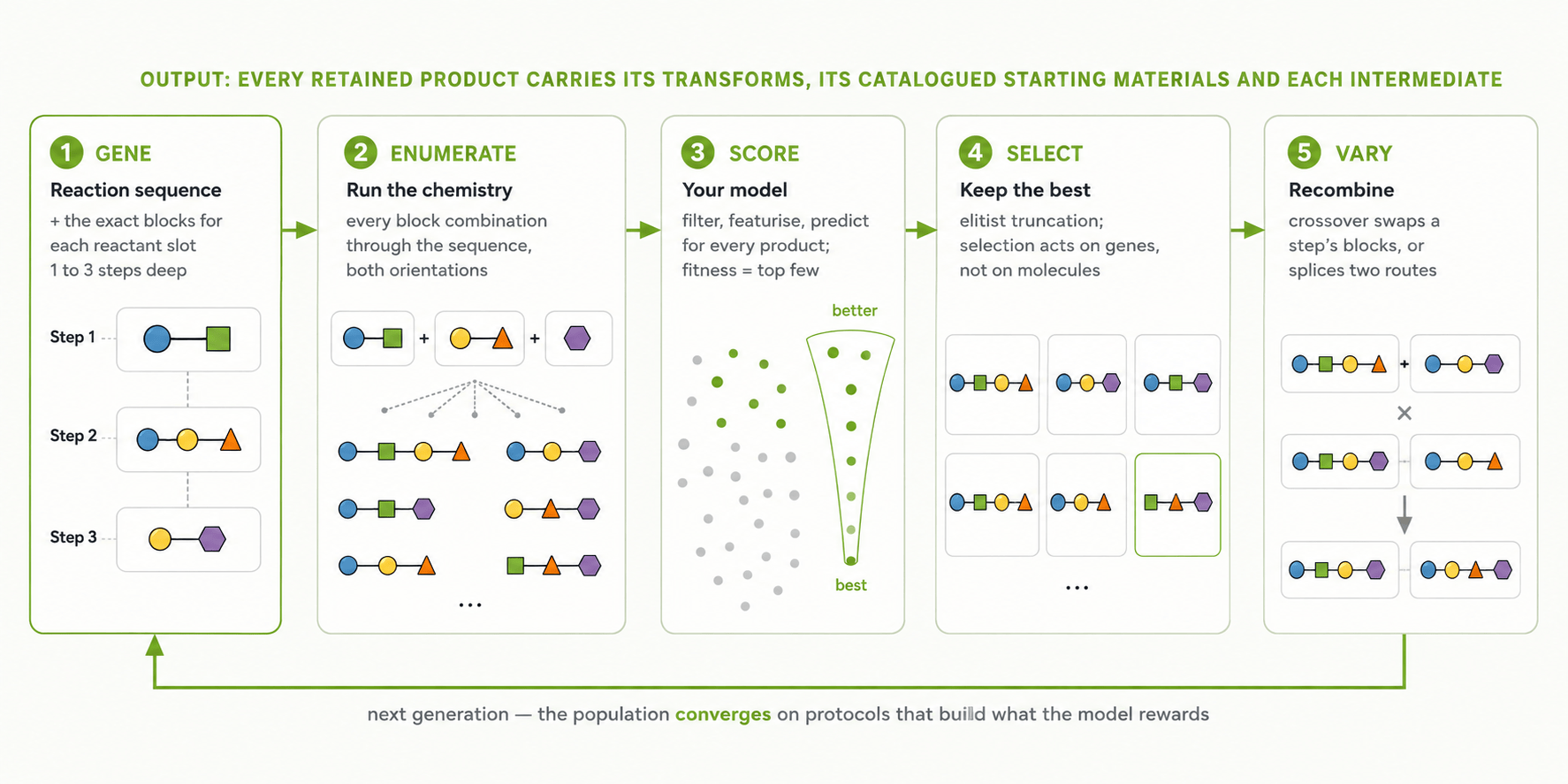
Design that comes with a route
A genetic algorithm over reaction space, scored against whatever objective matters to you, whether that is a potency model, similarity to a reference, or a selectivity window. Every surviving molecule arrives with the synthesis that makes it, built from cataloged starting materials, so what you receive is orderable rather than merely drawable.
How ChIP works → A worked campaign →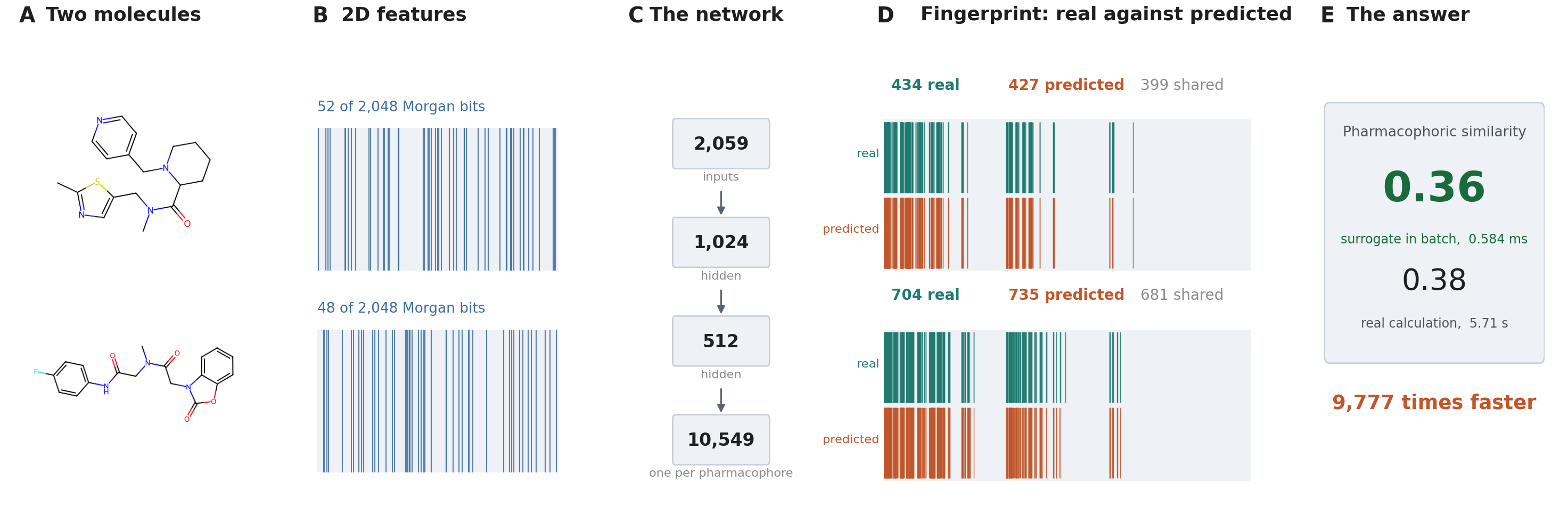
Pharmacophoric comparison at collection scale
The comparison a protein actually makes is three-dimensional, and it used to cost 5.7 seconds a pair. PharmCast predicts the full 10,549-bit PharmPrint™ straight from flat structure, so a PharmSim™ comparison runs in 0.584 milliseconds and agrees with the real calculation at Pearson 0.969. We run this against your references and your collection, and hand back a ranked shortlist worth the expensive look.
How PharmCast works →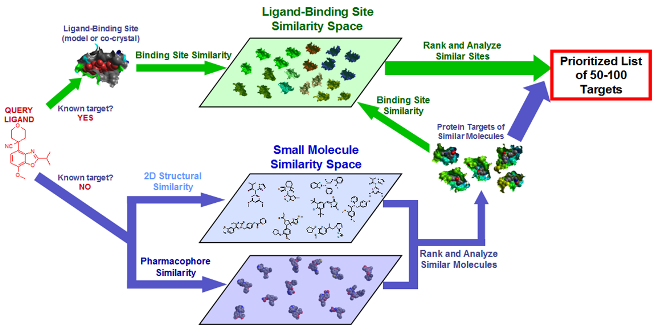
Target fishing
Start from a compound and ask what else it might be hitting. Known targets are expanded by binding site similarity; unknown ones are approached from the ligand side, through two-dimensional and pharmacophoric similarity, and the two routes converge on a ranked shortlist of 50 to 100 targets worth testing. This is how off-target liability gets found before the assay bill does.
Where the structural data comes from →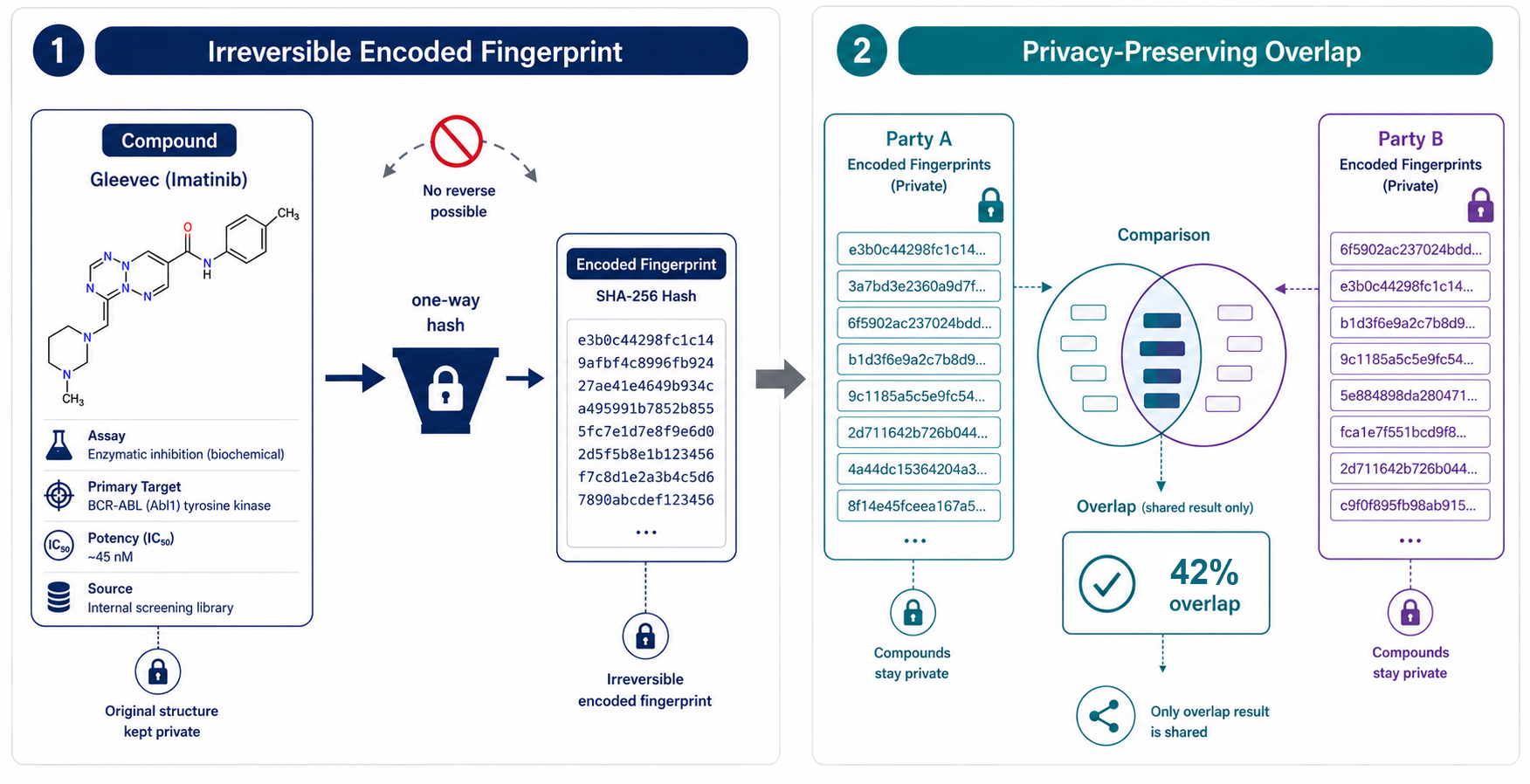
Knowing what you already own
Before you license a collection, or after you acquire one, the useful question is how much of it you already have. We answer it without either side revealing structures, using one-way encoded fingerprints, and return the overlap alone.
How the comparison runs →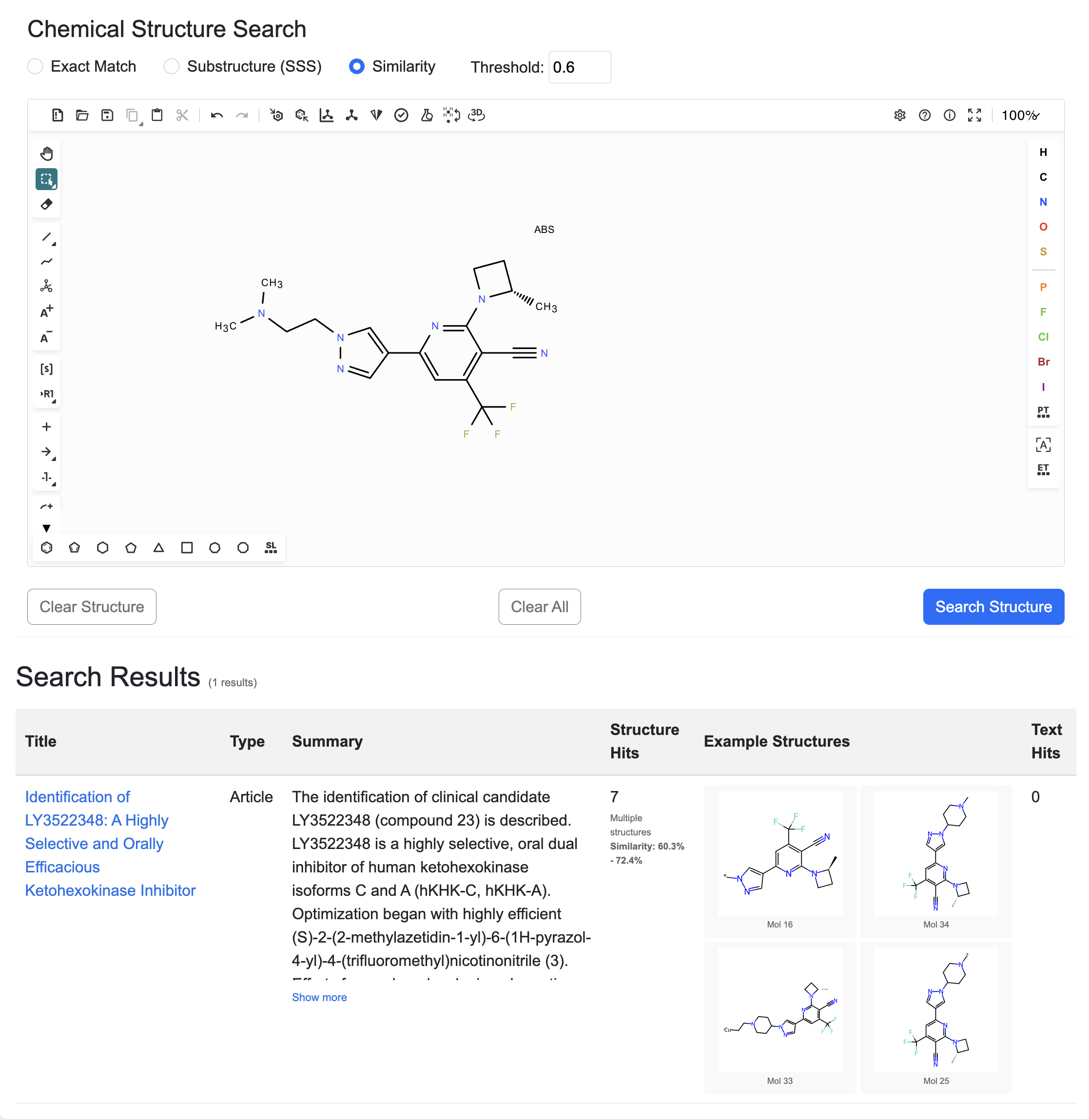
Curating your data to the standard of ours
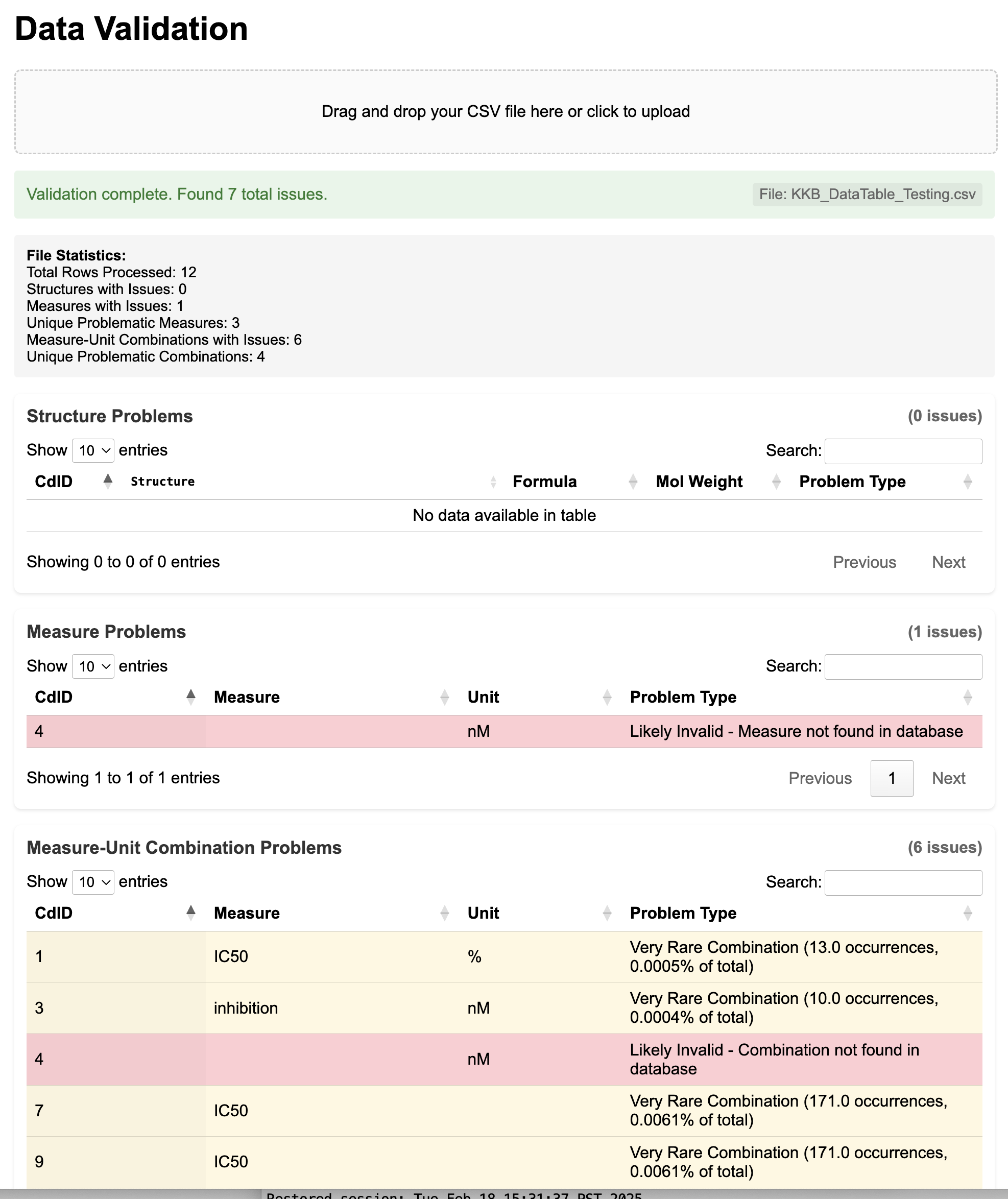
The knowledgebases are hand-curated, not scraped, and the same process runs against your internal data: content prioritisation, entry, quality control, target classification, then validation before anything enters a release. The output is your proprietary SAR in the same structure as the KKB, which means it trains models alongside it.
Support and documentation →How an engagement runs
Scoped, measured, and handed back
Most collaborations start with a single question and a defined dataset: one reference compound, one target family, or one collection to triage. We agree what a useful answer looks like before starting, run it against the same pipelines we use internally, and hand back the result with the method written down, so your own people can judge it rather than take it on trust.
Where a model is involved you get the evaluation alongside the predictions, including where it fails. Where a design is involved you get the synthetic route. Where curation is involved you get your data in the same structure as the knowledgebases, so it can train models beside them.
Start a conversation → See the products behind these services →
The method behind PharmCast is described in Muskal, S. M.; McGregor, M. J. PharmCast: rapid generation of three-dimensional pharmacophore fingerprints from two-dimensional structure without conformer generation. bioRxiv 2026, doi: 10.64898/2026.09.02.748999.