
Products & Services
Comprehensive solutions for drug discovery research
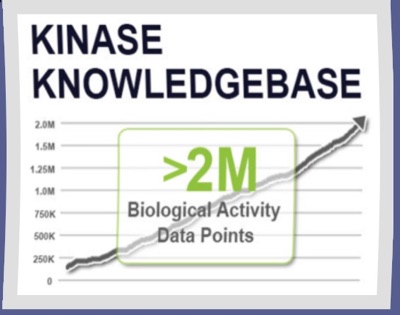
Kinase Knowledgebase (KKB)
- 3.34M+ bioactivity data points
- 579+ kinase targets
- Comprehensive SAR data
- Integrated Ketcher editor
- Advanced search capabilities
- Activity classifiers for 392 kinases, median ROC-AUC 0.91
- pIC50 potency regressors for 319 kinases
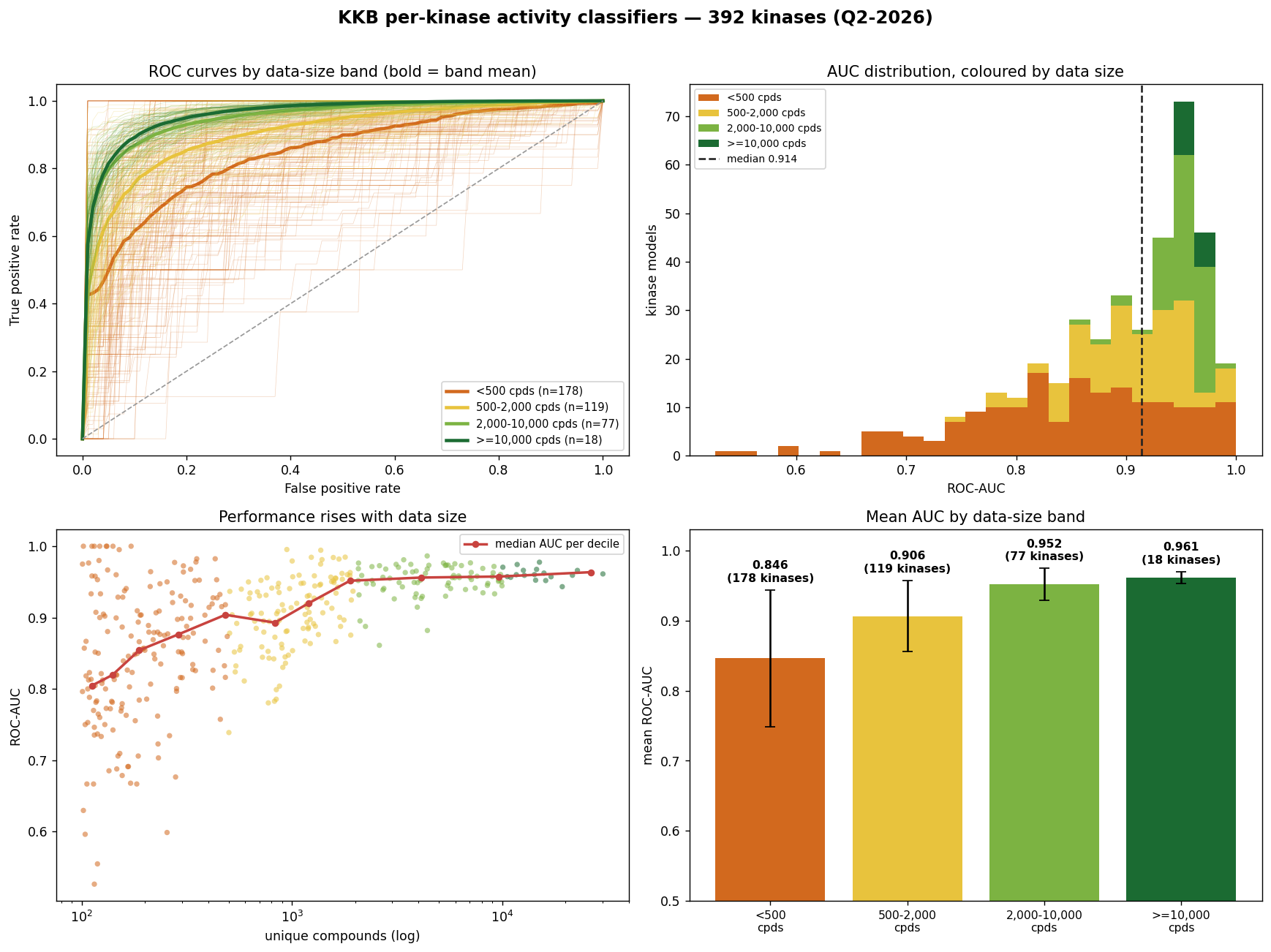
Per-kinase model performance across 392 kinases
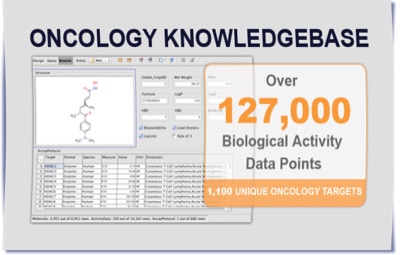
Oncology Knowledgebase (OKB)
- 146,206+ biological activity points
- Cancer-focused therapeutics
- Clinical trial data
- Drug resistance profiles
- Mutation analysis tools

Family Foundation Model New!
- The broad instrument: two separately fitted models over 34 protein families
- Which of two compounds a target prefers, and which of two targets a compound prefers
- 0.71 on 65,725 held-out comparisons, and 0.75 on 8,689
- 2,079 targets and 1,879 targets, across 34 families
- Trained on ChEMBL 37 alone, so both are downloadable
- The GPCR and kinase models below are family deep dives beside it
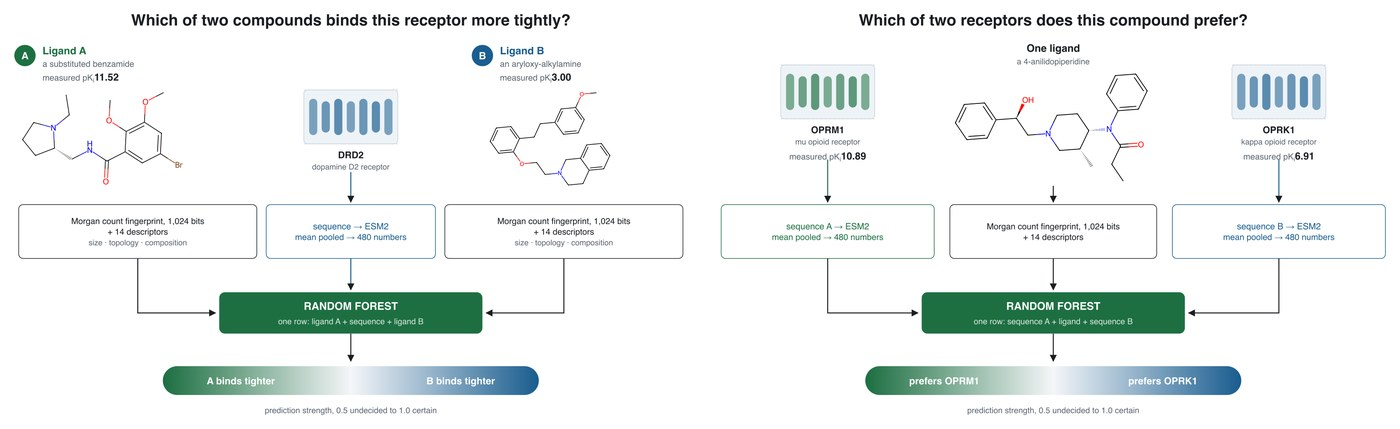
GPCR Foundation Model New!
- Two models: potency ranking and selectivity
- Reads the target sequence; no structure or docking
- Ranks which of two ligands is more potent at one target
- Ranks which of two targets a ligand prefers
- 0.77 on 762,493 held-out potency comparisons; 0.80 on 24,741 selectivity comparisons
- 0.94 and 0.93 at prediction strength 0.70 and above
- A deep dive into one family, on ChEMBL together with Eidogen-curated GPCR data
- 284 targets in the training data; 235 and 211 carry a measured held-out accuracy
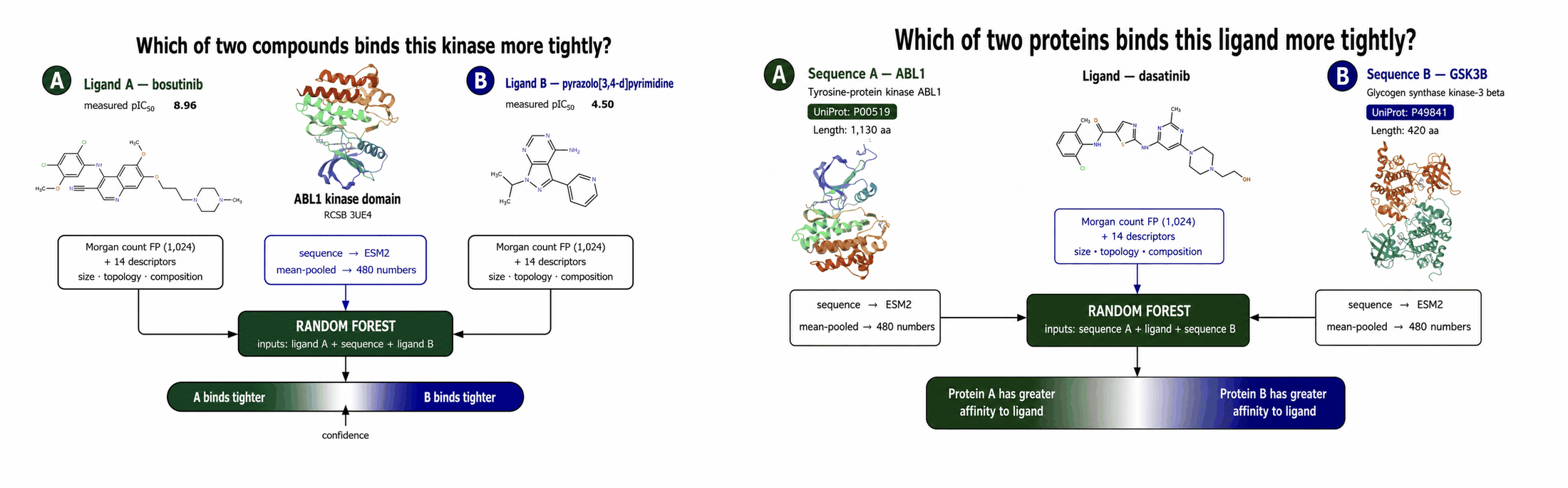
Kinase Foundation Model New!
- Two models: potency ranking and selectivity
- Reads the kinase sequence; no structure or docking
- Ranks which of two compounds is more potent
- Ranks which of two kinases a compound prefers
- 0.69 on 1.8M held-out potency comparisons; 0.75 on 3.1M selectivity comparisons
- 0.88 and 0.92 at prediction strength 0.70 and above
- A deep dive into one family: primary measurements from the Eidogen-Sertanty Kinase Knowledgebase, with ChEMBL used to cross-validate

PharmCast and PharmSim™ New!
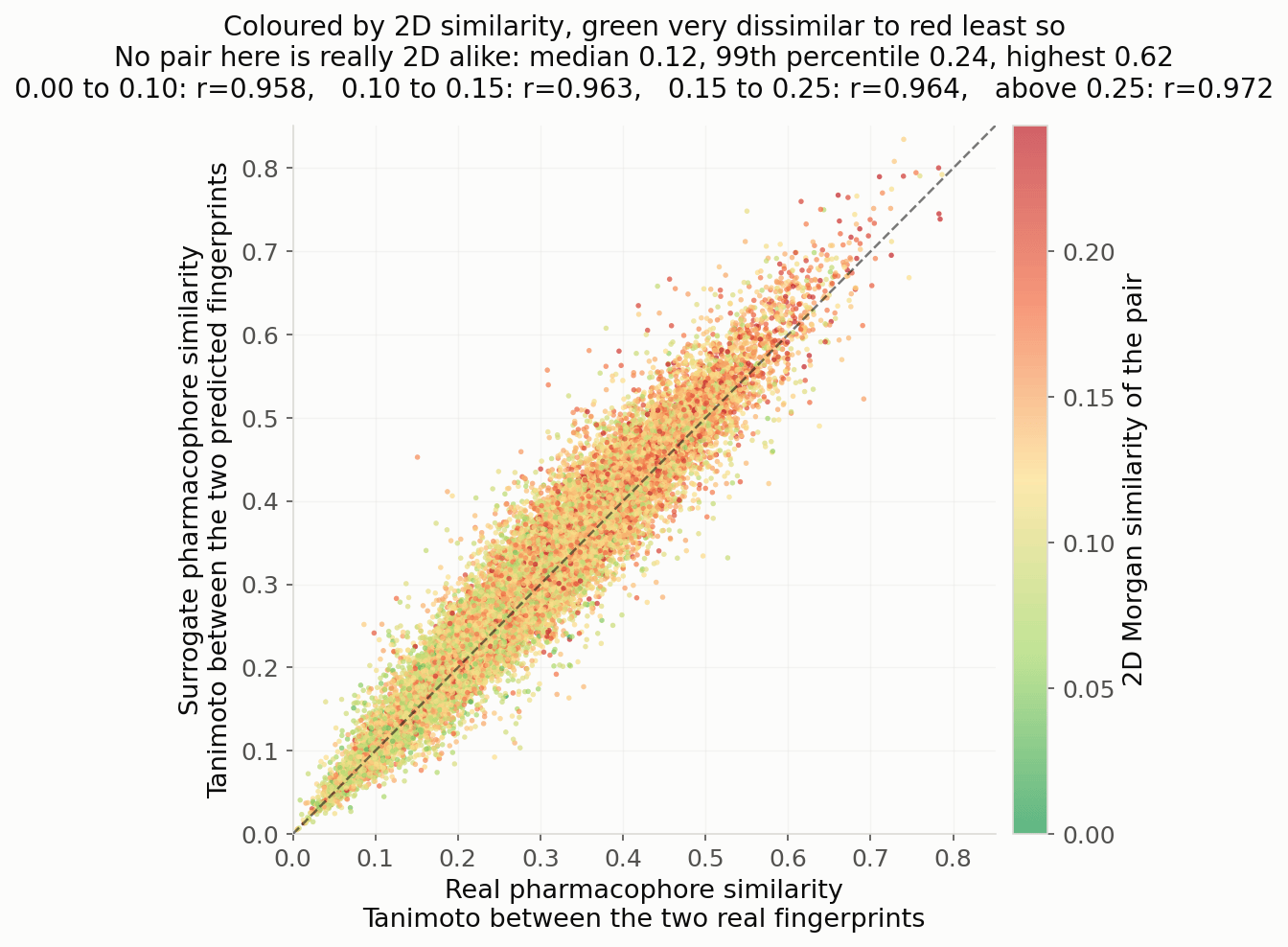
- Predicts a full 10,549-bit PharmPrint™ from flat structure
- No conformer generation at any point
- A complete comparison of two molecules in 0.584 milliseconds
- Against 5.7 seconds for the real calculation
- Agrees with it at Pearson 0.969
- True nearest neighbor in the top 100 for 95.3% of queries

Reverse Screen New!
- Given a molecule, the proteins it might interact with
- 27,797 co-crystal ligands indexed by PharmCast fingerprint
- A query fingerprinted in 4 milliseconds, compared in 40
- Docking runs only on what retrieval returns
- Against 40.5 hours to dock every characterized site
Swipe the diagram → · tap it for the full method
ChIP™ de Novo Design New!
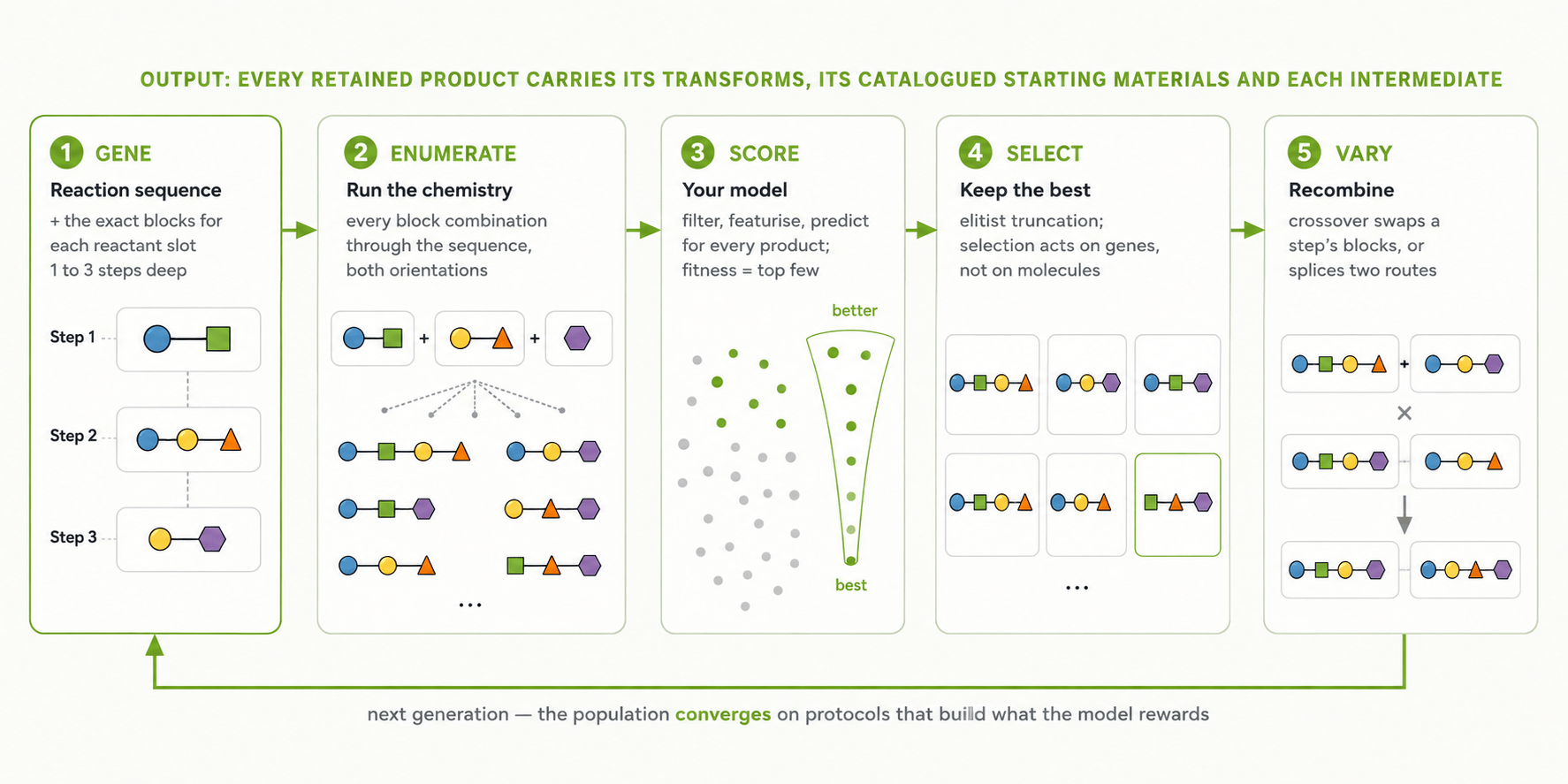
- Searches reaction space, not molecule space
- 85 validated reaction transforms
- 853,409 cataloged building blocks
- Runs against your model: potency, selectivity, ADME
- Designs the non-obvious “me-too”: high pharmacophore similarity, low 2D similarity
- Every design carries its full synthetic route
- Potency scoring, or a 3D pharmacophore scaffold hop
- Matched random control on every campaign
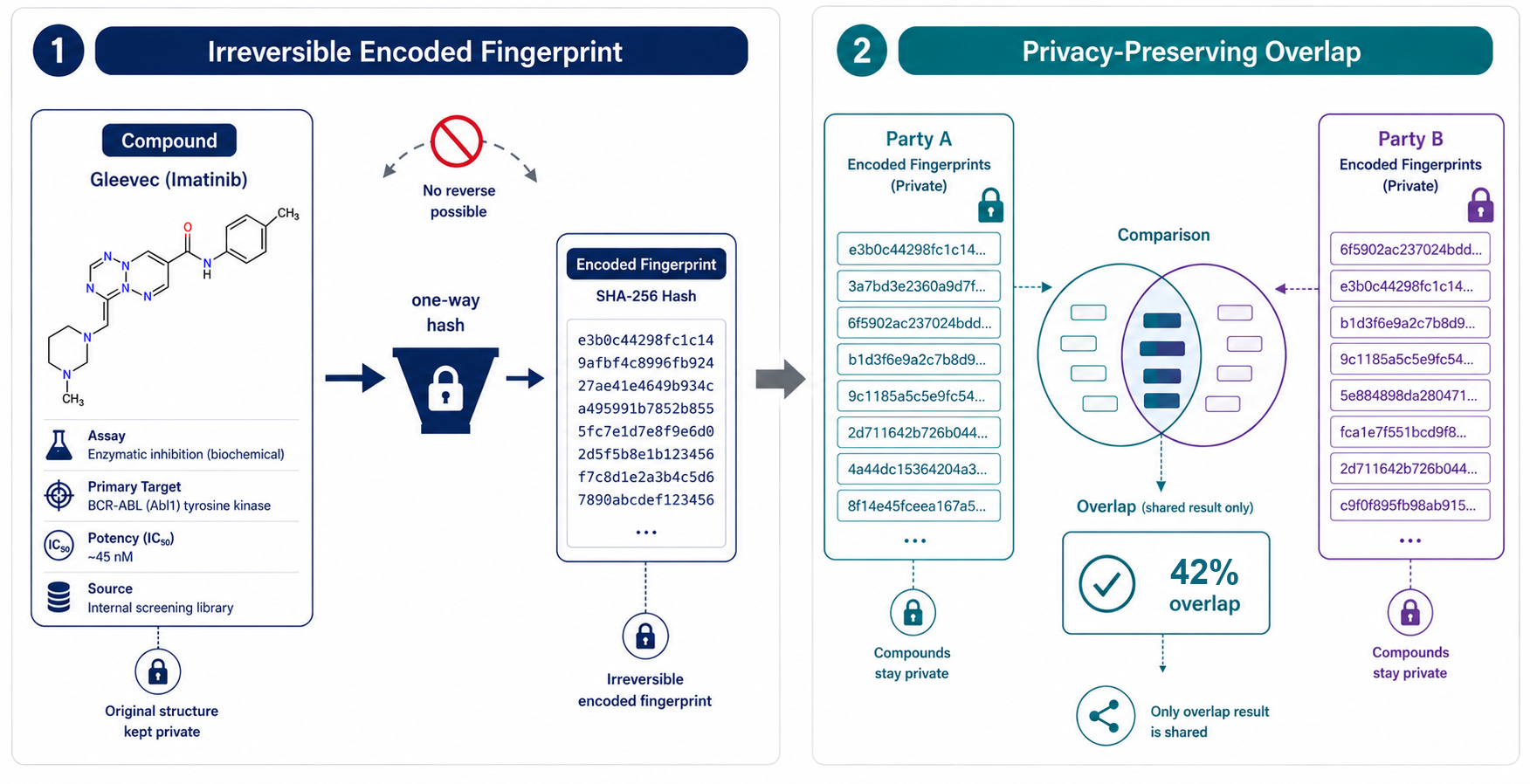
Illustrative example. Figures shown are for explanation only and are not results from our datasets.
Dataset Overlap Analysis New
- Works on any two SAR datasets, any target family
- Neither side reveals a structure
- Irreversible SHA-256 fingerprints, encoded locally
- Only the overlap percentage is shared
- Free downloadable toolkit
Training Corpora
- 4,612,044 compounds of the commercial screening collection
- 135,768 distinct Bemis-Murcko scaffolds per 200,000 molecules
- Median nearest-neighbor similarity 0.714, measured all against all
- Plus 1,524,535 peptide loops read from protein structures
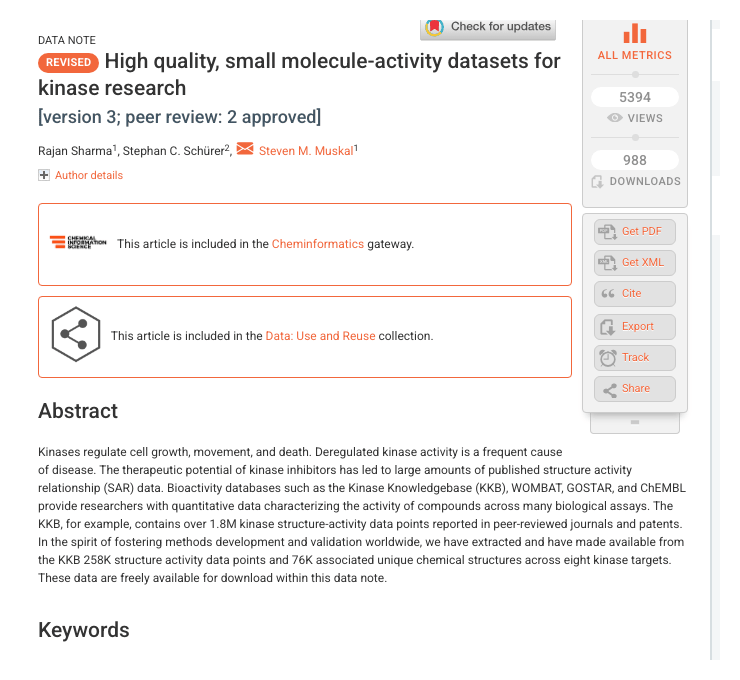
Kinase Validation Set
- 258,000 structure-activity points, freely available
- 76,000 unique structures across eight kinase targets
- Extracted from the KKB, published as a peer reviewed data note
Professional Services
Custom Database Development
Tailored solutions for your specific research needs
Data Integration
Seamless integration with existing workflows
Training & Support
Comprehensive training and ongoing technical support
Consulting Services
Expert guidance for drug discovery projects
Ready to get started?
Contact us for pricing and licensing information